
The Definitive Beginners Guide To Raising A Dog
The Modern Philosophy of Dog Parenting
A well-behaved dog isn't a robot that obeys commands — it's an emotionally secure partner that chooses to work with you because the relationship makes that choice rewarding.
For decades, dog obedience training was dominated by dominance theory: the idea that dogs are constantly vying for rank and that owners must establish themselves as the "alpha." Modern behavioral science has dismantled this model entirely. Research published in peer-reviewed veterinary literature confirms that reward-based methods are not only more humane — they are measurably more effective, producing faster learning and fewer behavioral side effects than punishment-based approaches.
The old model trained compliance. The new model builds capability. That distinction matters because a dog trained through fear may appear well-behaved until stress pushes it past its breaking point. A dog trained through positive reinforcement develops genuine emotional regulation — the ability to stay calm, make good decisions, and recover quickly from surprises.
This brings us to the concept of "Dog Pawtential": the idea that every dog has a best self waiting to be unlocked. Pawtential isn't about achieving perfect heel work or flawless sit-stays. It's about closing the gap between who your dog is under stress and who they can be when they feel safe, understood, and consistently guided. Science-backed approaches show that emotional health and physical behavior are inseparable — a dog carrying chronic anxiety will struggle to learn, regardless of how many repetitions you log.
What a truly well-behaved dog looks like is a calm animal that can adapt to new environments, recover from surprises, and respond to guidance — not one that shuts down out of fear.
Before any of these strategies make full sense, it helps to speak the language. The next section breaks down the essential terminology every modern dog owner needs to know.
Essential Dog Training Terminology
Understanding the language of dog training is the first step toward applying it effectively — and the gap between a frustrated owner and a confident one often comes down to knowing what these terms actually mean in practice.
Before diving into the mechanics of how dogs learn, it helps to establish a shared vocabulary. The concepts below appear throughout every serious conversation about canine behavior, and confusing them is one of the most common reasons training stalls.
The socialization window matters more than most owners realize. According to the American Veterinary Society of Animal Behavior, the primary socialization period occurs in the first three months of life — a window when sociability naturally outweighs fear, making positive new experiences far easier to absorb. Miss this window entirely, and you're working uphill for years.
It's also worth noting the difference between aversive methods and firm boundaries. Boundaries set through clear, consistent communication are not aversive — they're structure. Aversive methods specifically rely on pain or fear as the teaching mechanism, a distinction that matters enormously for a dog's long-term emotional health.
With these terms grounded, the next question becomes practical: exactly how do you use positive reinforcement to build reliable, lasting behavior — and why does timing make or break the whole process?
Dog Training 101: The Science of Positive Reinforcement
Reward-based training isn't just kinder than punishment — it's measurably more effective, producing lasting behavioral change without the emotional fallout that corrections create.
Now that the core terminology is in place, it's worth examining why positive reinforcement consistently outperforms other approaches at a biological level. Dogs learn through consequence. When a behavior produces something good, the brain reinforces the neural pathway associated with that action. When nothing happens — or something unpleasant does — the pathway either fades or becomes tangled with stress responses.
The numbers back this up. Approximately 80% of dogs show improved behavior when trained using positive reinforcement methods, and dogs trained this way are 15 times less likely to show symptoms of stress than those trained with aversive techniques. Those aren't marginal gains — they represent a fundamentally different relationship between dog and owner.
Timing is everything. The "mark" — a click or a sharp verbal cue like "Yes!" — exists because dogs connect consequences to behavior only within a narrow one-to-two-second window. Miss that window and you're reinforcing whatever the dog happened to be doing when the treat arrived. In practice, owners who pair a consistent marker with an immediate reward see faster, cleaner results than those who rely on delayed praise alone.
Corrections carry hidden costs. A leash pop or stern reprimand might suppress a behavior in the moment, but research shows it rarely eliminates the underlying motivation. What it can do is introduce chronic low-level anxiety, which over time correlates with increased reactivity and, in some cases, aggression. On the surface, a corrected dog may look compliant. Below that surface, stress hormones are doing long-term damage to the trust that makes real training possible.
Building a reward economy means treating every interaction as a transaction your dog consciously values. High-value treats for new or difficult behaviors, lower-value ones for mastered skills, and life rewards — a game of fetch, an open door — for real-world compliance. Consistency across every family member is non-negotiable; one person's exceptions become the whole household's loopholes.
These principles apply directly no matter what skill you're teaching — and they become especially critical when that skill involves a dog's personal space and sense of security.
Crate Training: Creating a Safe Haven
Done right, crate training gives your dog a calm, personal retreat — done wrong, it creates anxiety that can fuel problem behaviors like destructive chewing and even how to stop puppy biting becoming a daily battle.
The distinction between a "den instinct" and "crate as punishment" is everything. Dogs are naturally drawn to small, enclosed spaces that feel safe and predictable. A crate taps directly into that instinct — but only when introduced gradually and paired with positive associations. Locking a distressed puppy inside a crate and walking away is the fastest way to turn a potential sanctuary into a source of fear.
The goal is simple: the crate should always predict good things, never isolation or frustration.
Follow this step-by-step introduction to get it right from day one:
Managing whining is one of the most common sticking points. In practice, waiting out a brief whine (30–60 seconds) and rewarding silence is far more effective than opening the door mid-cry, which reinforces the behavior. However, persistent crying is a signal worth listening to — your dog may need a bathroom break or simply isn't ready for that duration yet.
Crate placement matters more than most owners expect. Position the crate in a social area of the home, like the living room, during the day so your dog doesn't feel exiled. At night, placing it near your bedroom helps puppies feel secure and makes it easier to respond to nighttime cues.
With the crate established as a genuine safe haven, you're better positioned to handle the next challenge most new owners face: all that mouthing, nipping, and chewing that puppies seem to do constantly.
Solving Common Puppy Problems: Biting and Chewing
Puppy biting and destructive chewing aren't signs of a "bad dog" — they're predictable, instinct-driven behaviors that every owner can address with the right dog training 101 framework.
Nipping, mouthing, and gnawing are among the top reasons new owners feel frustrated in the first weeks home. The good news: both behaviors are manageable once you understand what's driving them.
Puppy Biting: Communication, Not Aggression
Young puppies explore the world almost entirely with their mouths. Biting is how they play, test boundaries, and signal overstimulation or excitement. Treating it as defiance leads owners down the wrong path. Instead, recognize it as communication — then shape it.
Two approaches dominate the training literature:
A common pattern is that owners accidentally reinforce biting by pulling hands away dramatically or playing tug during nipping episodes. Calm, consistent responses outperform reactive ones every time.
Chewing: Respecting a Natural Drive
Chewing is a natural instinct that helps dogs relieve stress and clean their teeth. Punishing it entirely is both unrealistic and counterproductive — the goal is to redirect it, not eliminate it.
Effective chewing management comes down to three practical steps:
The hard truth: environmental management does most of the heavy lifting in early puppyhood. Set the space up for success, and the training becomes far easier. That instinct to explore through the mouth — and through the senses broadly — also hints at something even more consequential coming up next: how early experiences shape the entire arc of your dog's behavior and wellbeing.
The Life-Saving Importance of Early Socialization
Raising a happy dog isn't just about teaching tricks — socialization during the first few months of life is one of the most critical factors in your dog's long-term survival.
The stakes here are genuinely high. According to the American Veterinary Society of Animal Behavior (AVSAB), behavioral issues — not infectious diseases — are the number one cause of death for dogs under three years of age. Dogs that bite, show extreme fear aggression, or can't cope with ordinary life are far more likely to be surrendered or euthanized. This single statistic reframes socialization from a "nice to have" into a life-or-death priority.
Socialization means far more than "meeting other dogs." A common misconception is that letting your puppy play at the dog park once a week is sufficient. In practice, true socialization means systematic, positive exposure to a wide variety of stimuli. Your puppy's brain has a narrow developmental window — roughly 3 to 14 weeks — where new experiences are processed as normal rather than threatening. Miss it, and those gaps become deeply ingrained fears.
Here are 10 things to socialize your puppy to this week:
Safe socialization before full vaccination is possible. Carry your puppy in arms or a bag in public spaces, arrange playdates with vaccinated dogs in private yards, and enroll in puppy classes where facilities are properly sanitized. The risk of a behavior problem is statistically greater than the risk of disease exposure in controlled settings.
For city dogs especially, activities like urban herding exercises, nose-work games in busy parks, and structured leash walks through varied neighborhoods build the confident, adaptable temperament that makes everything else — including the core obedience commands we'll cover next — significantly easier to teach.
Mastering Basic Obedience: Sit, Stay, and Beyond
Teaching your dog five core commands creates the communication foundation every safe, well-adjusted dog needs — and how you teach them matters as much as what you teach.
Building on the socialization groundwork covered earlier, structured obedience training gives your dog a shared language with you. These five commands form the non-negotiable starting point:
Two reliable teaching methods: Luring uses a treat to physically guide your dog into position — fast results, but wean off the food quickly or it becomes a bribe. Shaping rewards successive approximations toward the final behavior, building a dog that actively problem-solves rather than following a food trail.
The single biggest reason dogs "forget" commands at the park: they never actually learned them there. As noted in Zak George's Guide to a Well-Behaved Dog, dogs do not generalize well — a "sit" mastered in your kitchen is a genuinely different skill at a busy intersection. Train in new environments deliberately and systematically.
Consistency across every family member is non-negotiable. If one person allows jumping while another corrects it, the dog learns that rules are unpredictable — not that jumping is wrong.
Once your dog reliably responds to these five commands, the next frontier is keeping their brain genuinely stimulated — because a trained dog with an under-occupied mind will still find trouble.
Enrichment: The Secret to a Calm, Happy Dog
A dog that destroys furniture or barks incessantly isn't a bad dog — it's an under-stimulated one. Meeting your dog's mental needs is just as critical as physical exercise, and neglecting either side of that equation almost guarantees behavioral problems down the line.
Physical exercise vs. mental stimulation are not interchangeable. A 30-minute run burns energy, but it doesn't engage problem-solving instincts, scent-processing capabilities, or the focused concentration dogs are wired to crave. In practice, a mentally tired dog is often calmer and more settled than one that's only been physically exercised. The goal is to target both — and enrichment activities are the most efficient way to do it. According to Wear Wag Repeat, enrichment activities can significantly relax anxious and high-energy dogs by providing a productive outlet for pent-up energy.
Food Puzzles
Puzzle feeders replace the bowl — and transform mealtime into a mentally engaging challenge. Ideas to try:
Scent Work
A dog's nose is its superpower, and channeling it constructively is one of the most effective calming techniques available. Scent work engages the brain deeply, often leaving dogs genuinely tired within 15–20 minutes.
Active Play
Structured play serves double duty — bonding time and behavioral outlet. Unlike free-roaming in a yard, intentional play keeps dogs engaged and responsive.
Managing a hyperactive dog starts here — not with corrections, but with meeting needs first. That mindset, it turns out, is exactly what separates owners of truly well-behaved dogs from everyone else.
To Those with Well-Behaved Dogs: How Do They Do It?
The real "secret sauce" of successful dog owners isn't a single trick — it's a set of daily habits that compound into a lifestyle.
Watch any owner with a genuinely well-behaved dog long enough and a clear pattern emerges. It's rarely about one perfect training session or one breakthrough moment. Instead, it's the quiet, unglamorous consistency applied across hundreds of ordinary days. As the Reddit /r/Dogtraining community broadly agrees: "A well-behaved dog is one whose needs are met and who understands the boundaries of their environment." That single sentence captures what the best dog owners actually do.
Here are the five habits that separate thriving dog households from struggling ones:
The result of these habits is a dog who isn't just obedient — they're genuinely settled and content. Knowing what that actually looks like in your own dog day to day is its own skill, and one worth developing closely.
10 Signs You're Giving Your Dog the Best Life
A truly happy dog broadcasts it through every part of its body — and learning to read those signals is one of the most rewarding skills you can develop as an owner.
The habits covered in previous sections — enrichment, consistent training, socialization, and a strong bond — don't just produce a well-behaved dog. They produce a visibly, measurably content one. Here's how to know it's working:
Run through this list honestly. The more boxes you check, the clearer it becomes which specific habits are actually making the difference — and those core principles are worth distilling into a quick-reference summary.
Key Takeaways for a Happy, Well-Behaved Dog
The difference between a struggling dog owner and a thriving one often comes down to four foundational principles applied consistently over time.
You've covered a lot of ground in this guide — from reading your dog's body language to recognizing the daily habits of owners with genuinely well-behaved dogs. Before moving into the next steps and resources, here's the distilled version: the non-negotiables that tie everything together.
The through-line connecting all four principles is relationship. Dogs are social animals hardwired to cooperate with a trusted leader. When the relationship is strong, commands feel natural. When the bond is missing, even the cleverest training techniques produce fragile results.
One practical way to think about it: structure without warmth produces compliance; warmth without structure produces chaos. The goal is both, woven into the everyday rhythms of life with your dog.
These takeaways aren't a checklist to complete — they're an orientation to carry forward. And if you're wondering exactly where to go from here, the right tools and guidance can make all the difference.
Next Steps: Resources for Your Dog's Potential
Raising a happy, well-behaved dog is not a destination — it's a relationship you keep building, one consistent interaction at a time.
The earlier sections of this guide covered everything from reading your dog's body language to positive reinforcement science, socialization windows, and the four principles that separate thriving dog owners from struggling ones. Now the question becomes: where do you go from here?
Knowing when to call a professional is one of the smartest decisions you can make as a dog owner. The distinction between a trainer and a behaviorist matters. A certified dog trainer is the right call for foundational obedience, leash manners, and everyday behavior goals. A veterinary behaviorist or certified applied animal behaviorist steps in when the problem runs deeper. According to the American Veterinary Society of Animal Behavior (AVSAB), professional help should be sought immediately when you observe signs of aggression or severe separation anxiety — conditions that carry real safety implications and often have underlying anxiety or medical components that reward-based training alone won't resolve.
Further Reading to Build Your Knowledge:
Dog Pawtential exists to close the gap between knowing what to do and actually doing it consistently. Whether you're working through a specific behavioral challenge, building a training routine from scratch, or simply looking to deepen your understanding of your dog's needs, the resources and guidance available here are designed to meet you where you are.
Here's the most important thing to hold onto: it is never too late to start. Dogs are remarkably adaptable. An older dog can learn new behaviors. A reactive dog can become calmer. A fearful dog can build confidence. The science is clear, the tools are available, and your dog is ready.
Start today. Your dog's best life is still ahead.
🐾 Related Reads
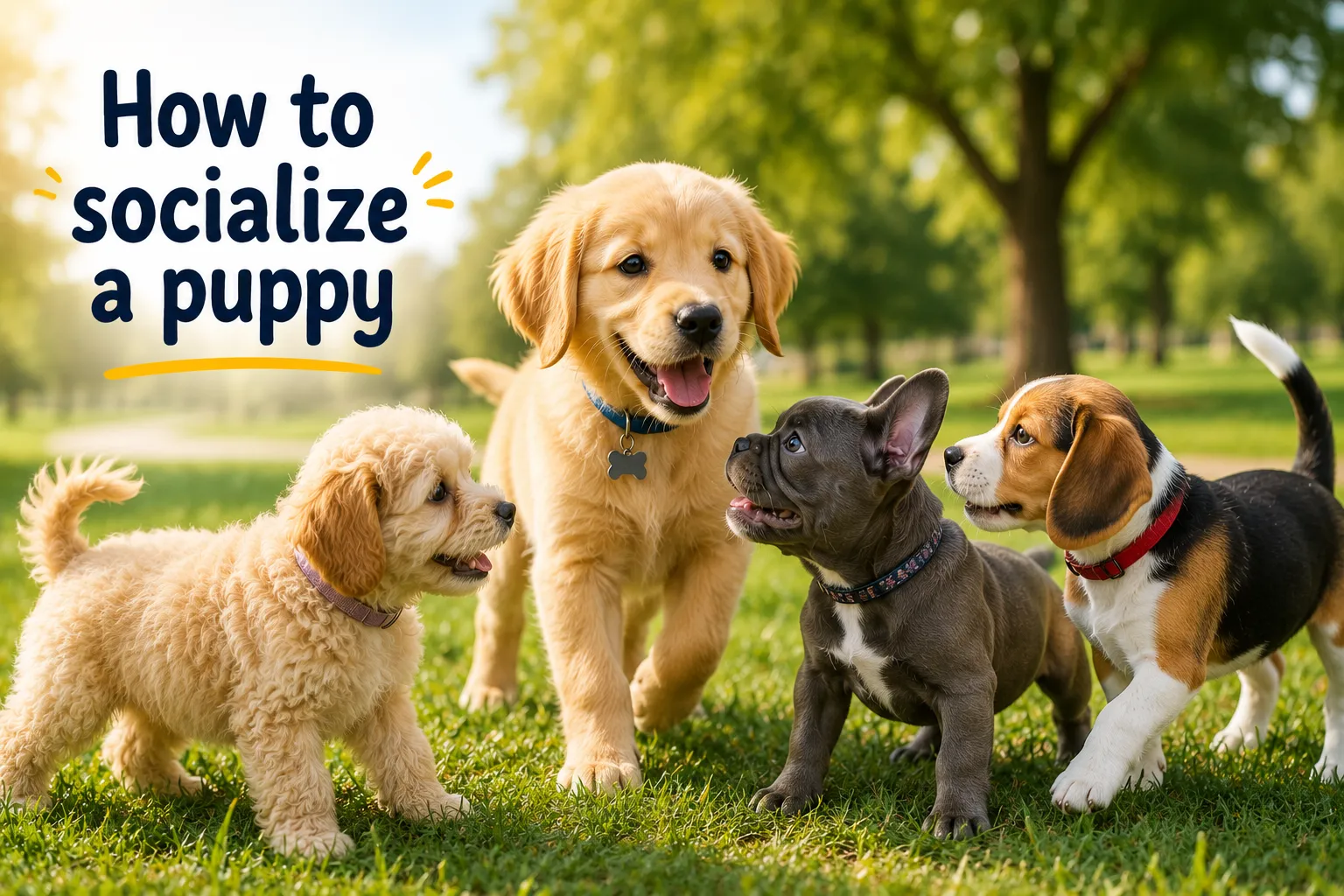
How To Socialize A Puppy
Step 1: Identify the Critical Socialization Window Missing this window doesn't just slow progress — it can cost a dog its life. According to the American...

How To Stop Your Dog From Pulling On The Leash
How to Prepare Your Gear and Environment Learning how to train a dog not to pull on leash starts before you ever step outside. The right equipment and a...

Getting A Puppy
Bringing your puppy home for the first time is exciting—and a little overwhelming. Start by creating a safe, quiet space with a bed, water, and a few toys....

Bringing Your Puppy Home for the First Time
Bringing your puppy home for the first time is exciting—and a little overwhelming. Start by creating a safe, quiet space with a bed, water, and a few toys....