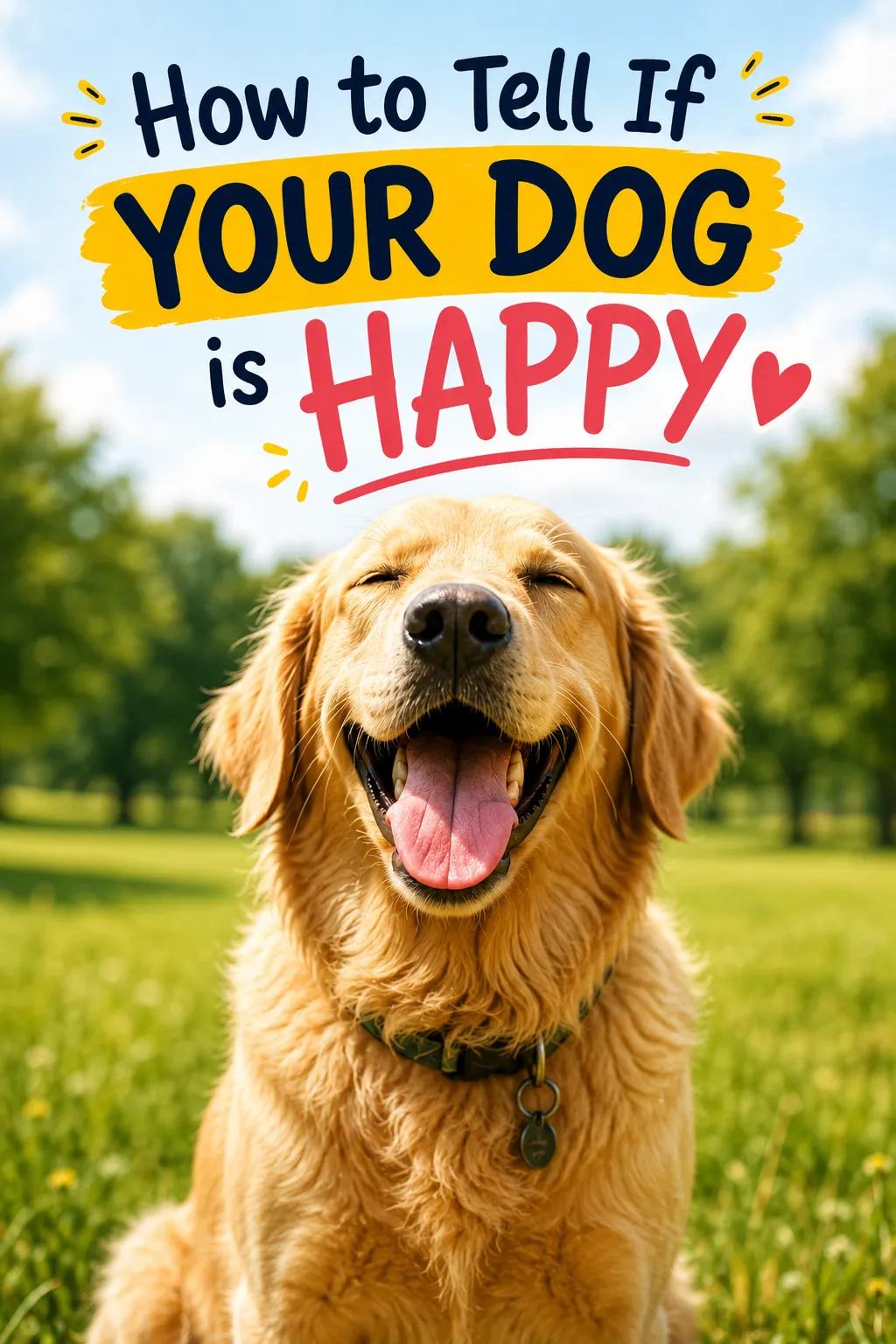
How To Tell If Your Dog is Happy
The Myth of the Happy Tail Wag
A wagging tail doesn't mean a happy dog — and misreading that signal can lead to real trouble. Understanding true dog tail wagging meaning requires looking beyond the wag itself to what the entire body is communicating.
Tail wagging signals arousal, not emotion. It tells you a dog is stimulated — excited, alert, anxious, or even agitated. The direction, speed, and height of the wag each carry distinct meaning.
The critical takeaway is this: no single body part tells the whole story. A dog broadcasting stress through tight shoulders and a hard stare isn't made safe by a wagging tail. Reading your dog accurately means scanning everything — posture, ears, eyes, mouth — all at once. The next section breaks down exactly what a truly relaxed dog looks like from nose to tail.
Signs Your Dog Is Truly Content and Relaxed
A genuinely happy dog broadcasts calm through every inch of their body — and learning to recognize that picture is the first step toward spotting when something's wrong.
As trainer Brenda Aloff notes via the AKC, "A happy dog has an open countenance, a relaxed expression, a lack of stress lines around the face, and no tension in their body." That single description is your baseline for comparison.
Open countenance refers to a face that looks loose and unguarded — no furrowed brow, no tight muscles pulling the lips back, no hard stare. The mouth may hang slightly open, almost like a relaxed smile. Soft eyes go hand-in-hand with this: the lids appear slightly droopy rather than wide and alert, with no white visible around the iris.
Use this checklist when reading your dog's body:
When these cues are present together, your dog is communicating safety and ease. Knowing this "soft dog" baseline makes it far easier to catch the early, often-missed signals of signs a dog is stressed — subtle shifts in posture and expression that we'll unpack next.
Decoding the Subtle Language of Canine Stress
Recognizing dog stress signals early can prevent a minor moment of discomfort from escalating into fear, aggression, or anxiety. Dogs rarely go from calm to reactive without sending warnings first — the problem is that those warnings are easy to miss.
The eyes are often the first place stress appears. The American Kennel Club identifies "whale eye" — when the whites of the eyes (sclera) become visible — as a primary indicator of fear or stress. You'll often see this during resource guarding, when a dog is hovering over food or a toy and cuts their gaze sideways without moving their head.
Displacement behaviors signal internal conflict. When a dog repeatedly licks their lips or yawns without being tired, they're not relaxing — they're self-soothing. These out-of-context behaviors appear when a dog feels pressure but hasn't yet decided how to respond.
Ears and posture complete the picture. Ears pinned flat against the skull typically signal fear, especially when paired with a lowered head or tucked tail. Even subtler is the freeze response — a dog that suddenly goes completely still. That abrupt stillness isn't calm; it's a dog processing a perceived threat before deciding what comes next.
Understanding these signals matters most in context — which is exactly where the conversation gets more complex.
The Rise of Canine Anxiety: Why Context Matters
Understanding how to tell if my dog is happy requires looking beyond the moment — context shapes everything a dog communicates through body language.
The post-pandemic shift has been a significant driver of rising canine anxiety. Millions of dogs grew up during lockdown with near-constant human company, making the return-to-office transition genuinely destabilizing. According to dvm360, dog separation anxiety increased by over 700% between 2020 and 2022 — a staggering figure that underscores just how profoundly routine changes affect our dogs.
Beyond separation, research from the University of Helsinki found that 72.5% of dogs exhibit at least one anxiety-related behavior, with noise sensitivity topping the list. Other common triggers include:
A critical caveat: stress signals are situational. A dog trembling at the vet isn't necessarily anxious at home — and the reverse is equally true. In practice, a dog may mask stress beautifully in familiar settings while completely shutting down elsewhere.
One practical approach is keeping a trigger log — a simple note tracking what happened before and during a stress signal. Patterns often emerge quickly, turning guesswork into clarity. That said, context alone doesn't always tell the full story, especially when a dog's reaction looks more like pure excitement than fear — which is exactly where things get tricky.
Overjoyed or Overwhelmed? Distinguishing High Arousal
Not every burst of excited energy signals happiness — some frantic behavior is actually a dog's way of releasing stress, not expressing joy.
Expert trainers distinguish 'joy' from 'over-arousal' by looking at eye quality: softened eyes signal genuine happiness, while hard, staring eyes signal tension.
A common pattern is seeing two dogs look nearly identical during a greeting — both jumping, both moving fast — yet one is happy and the other is overwhelmed. The key difference is body tension.
Over-stimulation can flip a dog's excitement into anxiety surprisingly fast. One practical approach to catching this early is the consent test: pause petting, pull your hand away, and watch what the dog does. A happy dog nudges you to continue. An overwhelmed dog steps back or shakes off — a clear signal to give them space.
Recognizing these distinctions is the foundation of a truly supportive relationship, which is exactly what the next section's actionable strategies are built around.
The Bottom Line: 5 Ways to Support Your Dog's Emotional Health
Reading your dog's emotional state is an ongoing practice — and small daily habits can make the difference between a dog who merely copes and one who genuinely thrives.
Applying these five principles consistently creates the foundation for a deeper bond — one that dedicated behavioral guidance can help you strengthen even further.
Unlocking Your Dog's Full Potential with DogTown
Mastering canine body language is the single most powerful step you can take toward a richer, more rewarding life with your dog. Every tail wag, ear position, and muscle shift is a message — and now you have the tools to receive it.
The sections above have walked you through the science of happy vs. stressed signals, the nuances of high-arousal states, and the daily habits that protect your dog's emotional wellbeing. None of that knowledge stays abstract for long. In practice, the more you observe, the faster your instincts sharpen — and the more trust you build with your dog during training, play, and quiet moments alike.
DogTown exists to be your partner in that ongoing journey. Whether you're working through a new training challenge, decoding a puzzling behavior, or simply wanting to understand what your dog is trying to tell you, there's always more to learn — and more joy to unlock together.
Apply what you've learned here starting today: watch your dog during their next play session, note what relaxed looks like for them specifically, and let those observations guide your next move.
Ready to go deeper? Explore expert behavioral guides, training tips, and more at dogpawtential.com — because every dog deserves an owner who truly gets them.
🐾 Related Reads
How To Tire Out A High Energy Dog
How to Understand Your Dog's Energy Needs Learning how to tire out a high energy dog doesn't have to be complicated. Knowing how to tire out a...
How To Socialize A Puppy
Step 1: Identify the Critical Socialization Window Missing this window doesn't just slow progress — it can cost a dog its life. According to the American...
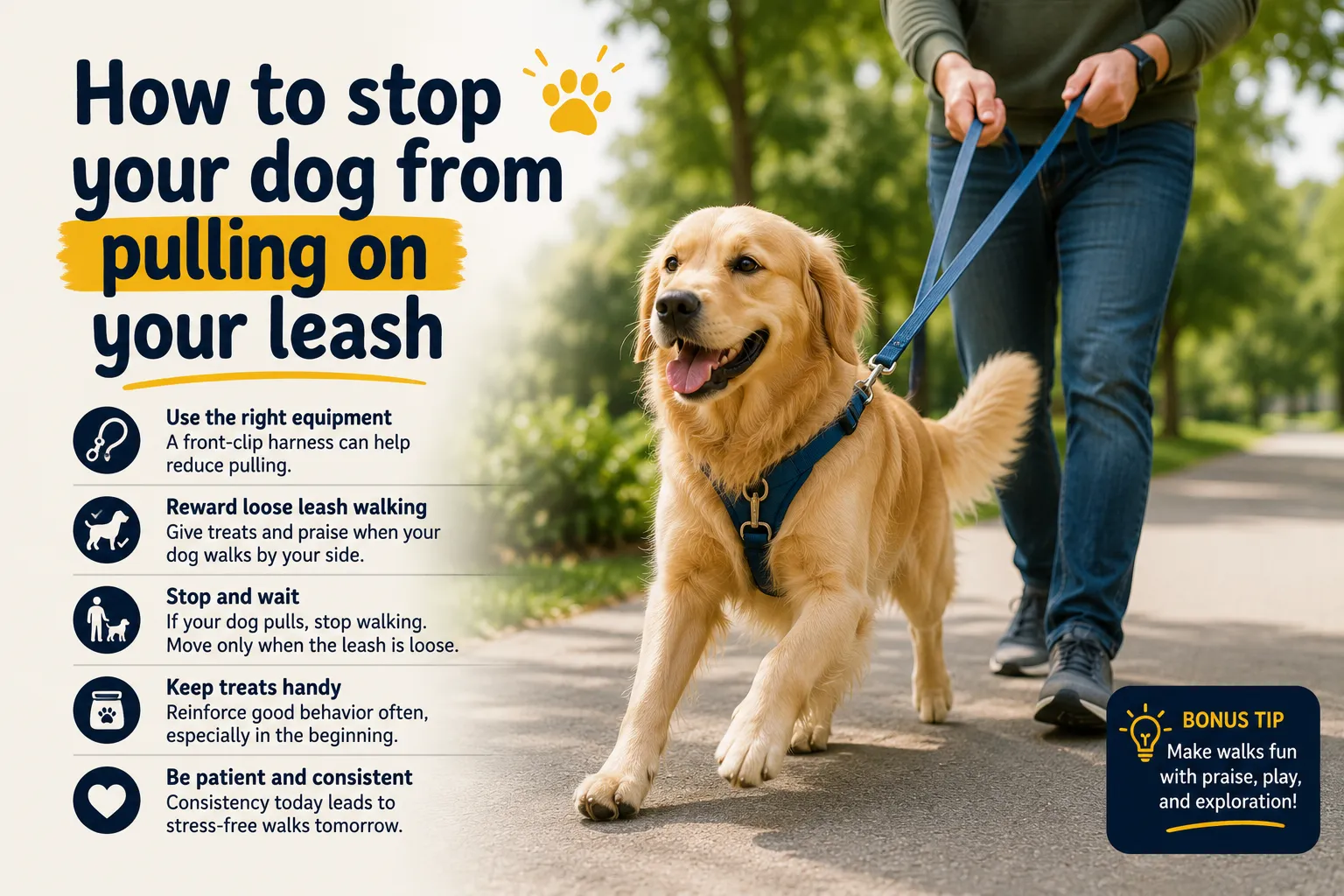
How To Stop Your Dog From Pulling On The Leash
How to Prepare Your Gear and Environment Learning how to train a dog not to pull on leash starts before you ever step outside. The right equipment and a...

How To Crate Train Your Dog
The Problem: Why Generic Crate Training Fails First-Time Owners Crate training a puppy is one of the most misunderstood processes in pet ownership — and that...